


Arizona’s momentum has outpaced its talent pipeline.
In spring 2022, Advancing Arizona’s Economy: Investment in Workforce Development, commissioned by Arizona’s leading business organizations, made a strong case for targeted investment in postsecondary education.
Since then, Arizona has attracted major corporate investment, reestablished itself as a national hub for advanced manufacturing, expanded its health care sector and sustained some of the strongest population growth in the country. That success has intensified demand for a highly skilled, credentialed workforce.
Sustaining that growth through the next decade will depend on developing the workforce Arizona trains itself. That is the central finding of The Education Dividend: A Decade for Growth, a new report prepared by Rounds Consulting Group for the Arizona Board of Regents. The first analysis of its kind in Arizona, it compares the state’s 10-year job projections with the talent supply from every level of education beyond high school. It updates and expands ABOR’s 2022 workforce analysis.
KEY FINDINGS AT A GLANCE

54,500
Annual job openings requiring a bachelor’s degree or higher

26,100
Arizona public university graduates who stay to join the state’s workforce each year

10,000+
Annual shortage of bachelor’s and graduate-level workers, after in-migration

$4B-$6B
State and local tax revenue at risk over the next decade
Demand still outpaces supply —
and migration can’t close the gap.
Bachelor’s degree production is up by nearly 3,000 a year since 2022, and adult bachelor’s attainment rose from 18.4% to 20%. But in-migration of degree holders has slowed, leaving a shortage of more than 10,000 workers every year.
Annual job openings requiring a bachelor’s degree or higher
Annual supply of degree holders
THE COST OF THE WORKFORCE GAP
A shortage that compounds every year.
Because the shortage of bachelor’s and graduate-level workers builds year over year, so do its fiscal costs. Under current trends, Arizona is projected to forgo $4 billion to $6 billion in combined state and local tax revenue over the next decade, with annual losses approaching $1 billion by year ten.
These are not one-time losses. They represent a lasting reduction in the state’s economic output and tax base if the gap goes unaddressed.
$4B-$6B
in state and local tax revenue at risk over ten years
~$1B
in annual losses by year ten
The Upside
The education dividend
If Arizona matched national averages in high school graduation, college enrollment and college completion, the state
would gain every year, feeding directly into a larger pipeline of bachelor’s and graduate degree holders and generating lasting economic returns.:
+11,200
more high school graduates
+16,700
more college enrollees
+13,400
more college graduates
ARIZONA COMPARED WITH NATIONAL BENCHMARKS
High school graduation rate

College enrollment rate

College completion rate (6-year)

Arizona’s college enrollment and six-year completion rates reflect the state’s three public universities only.
Sources: Arizona Department of Education; IPEDS; U.S. Census Bureau; National Student Clearinghouse; Arizona Board of Regents
Economic impact
What higher ed is worth
Reaching the national average
+1.3B
Additional annual labor income
Increase in wages due to higher education
+$478M
New state and local tax revenue,
annually
Recurring every year
$5B
In new tax revenue over ten years
Reaching the national average
Surpassing the national average
+1.9B
Additional annual labor income
Increase in wages due to higher education
+$740M
New state and local tax revenue,
annually
Recurring every year
$7B
In new tax revenue over ten years
Surpassing the national average
the earnings return
A degree pays off – for graduates and for Arizona.
A bachelor’s degree adds $25,900 a year in median earnings over a high school diploma. A graduate degree adds another $16,900 over a bachelor’s.
Even reaching the midpoint toward the national average would add an estimated $563 million in annual labor income and $215 million in new annual tax revenue – gains that recur every year.
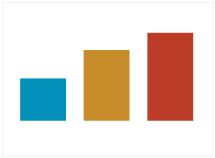
Median annual earnings by educational
attainment, Arizona, 2023.
A decade of growth
The Education Dividend: A Decade of Growth
endorsements
Arizona’s business leaders stand behind the findings.

We endorse this report without reservation. It gives Arizona’s leaders the facts they need to treat talent as the economic priority it has become. Employers across our state are counting on Arizona’s leaders to act on it.
– Danny Seiden
President and CEO,
Arizona Chamber of Commerce and Industry
Greater Phoenix has earned its place among the most competitive regions in the country. This report shows what it will take to keep it. We stand firmly behind its findings and its call to invest in the people who power our economy.
– Todd Sanders
President and CEO,
Greater Phoenix Chamber
For rural communities, this is not an abstract policy debate. It is about whether our kids can build a future in the places they grew up. This report shows Arizona how to make that possible, and we support it wholeheartedly.
– Paul Thomas
CEO,
Northern Arizona Leadership Alliance
This is the analysis Arizona’s leaders have needed. It
defines the challenge with precision and charts a
clear path to meet it. It has our full support, and we
stand ready to help carry it forward.– Ted Maxwell
President and CEO,
Southern Arizona Leadership Council

Read the full report.
The Education Dividend: Closing Arizona’s Talent Gap to Strengthen Economic Competitiveness, prepared for the Arizona Board of Regents by Rounds Consulting Group, Inc., Fall 2026.